
Personal Banking

Business Banking
Digital Banking
 မြန်မာ
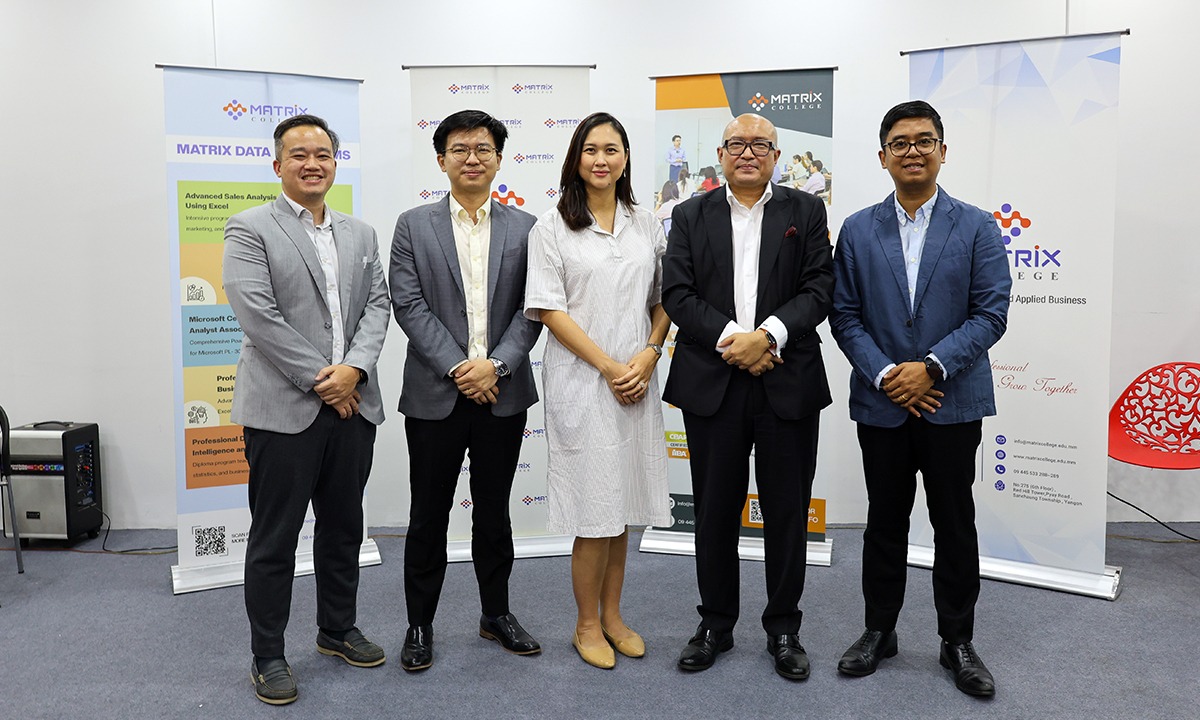
To advance Myanmar’s Business Analysis sector and provide access to global professional standards, Matrix Collegehosted the “IIBA Official Program Launch Event & Free Seminar” on March 8, 2026, at Red Hill Tower. Dr. Win Lwin, CEO of Myanma Tourism Bank (MTB), participated to support this landmark educational initiative. During the event, Matrix College was officially announced as the first Official Academic Partner of the Canada-based IIBA® in Myanmar. The program featured a panel discussion on “Insights into Business Analysis: Roles, Skills, and Value Creation,” highlighting: -Panelists:U Ye Mon Min (CBO, Wave Money), Dr. Win Lwin Lwin ( CEO, Myanma Tourism Bank ), and U Wai Lin Htun ( Instructor, Matrix College ). -Moderator: Daw May Sopyae Nyan, CFA ( Founder & Managing Director, Matrix College ). -Focus: Essential BA skillsets for Digital Transformation, practical applications, and Business Value Creation. MTB Bank believes that developing a skilled next generation is vital for national economic growth. We remain dedicated to supporting initiatives that connect education with the business world. 𝐂𝐫𝐞𝐚𝐭𝐞 𝐘𝐨𝐮𝐫 𝐖𝐨𝐫𝐥𝐝 𝐖𝐢𝐭𝐡 𝐌𝐓𝐁 သင့်အနာဂတ်ဖန်တီးဖို့ MTB နဲ့လက်တွဲစို့
Read More
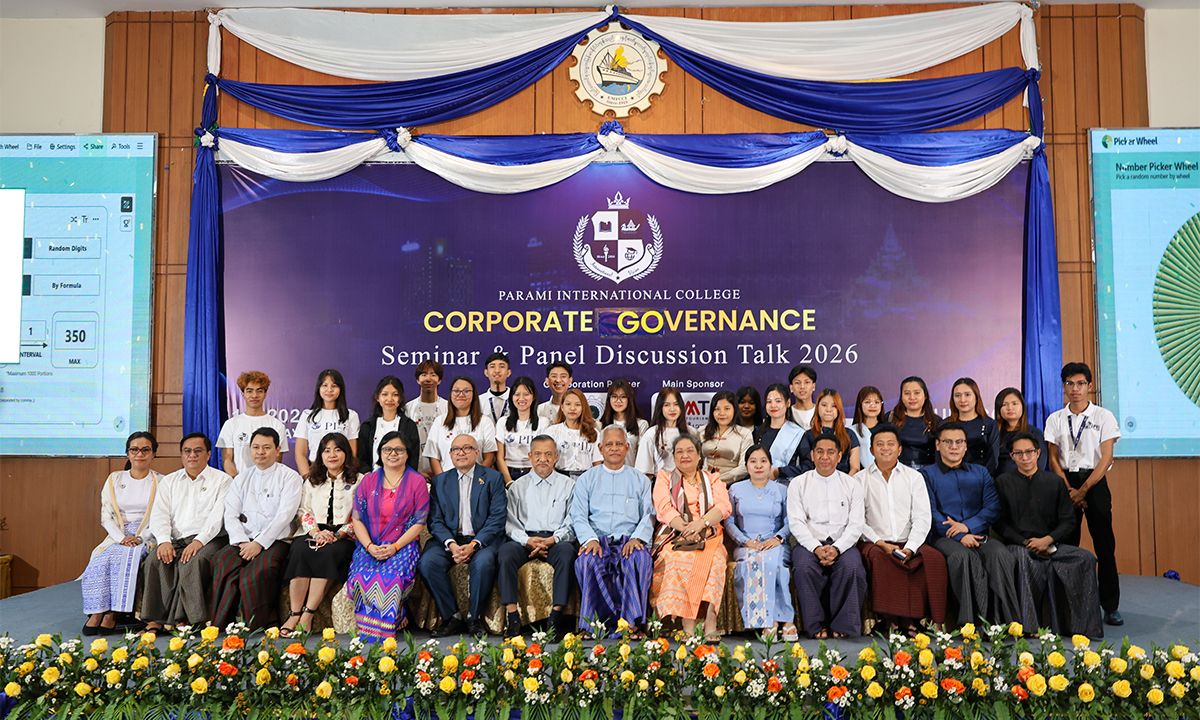
Empowering Sustainable Growth through Strong Corporate Governance Corporate Governance is a fundamental pillar for the long-term sustainability and modern growth of any business. To promote these values, PIU College and UMBEEA jointly organized the “Corporate Governance Seminar & Panel Discussion 2026” on March 1, 2026, at UMFCCI (Mingalar Hall), Yangon, with Myanma Tourism Bank (MTB ) as the Main Sponsor. The event featured in-depth discussions on building effective governance mechanisms and future opportunities: 💠Keynote Presentation: Delivered by Prof. Dr. Thaung Htay (Honorable Professor - PIU College). 💠Panel Discussion: Titled “Corporate Governance Culture for Business,” featuring: 🔹U Aung Naing Oo (Retired Union Minister) 🔹Dr. Win Lwin (CEO - MTB Bank) 🔹Ms. Caroline Yin Yin Htay (CEO - U9) 🔹Dr. Zaw Win Sandy (Group CEO - Pun Hlaing Hospitals) 🔹U Kyaw Dewa (President - UMBEEA) as Moderator. By bridging the gap between business and education, MTB Bank aims to foster a more transparent professional environment in Myanmar. We stand ready to support entrepreneurs in systematically expanding their businesses through our reliable and robust banking services. 🤝 𝐂𝐫𝐞𝐚𝐭𝐞 𝐘𝐨𝐮𝐫 𝐖𝐨𝐫𝐥𝐝 𝐖𝐢𝐭𝐡 𝐌𝐓𝐁 သင့်အနာဂတ်ဖန်တီးဖို့ MTB နဲ့လက်တွဲစို့
Read More
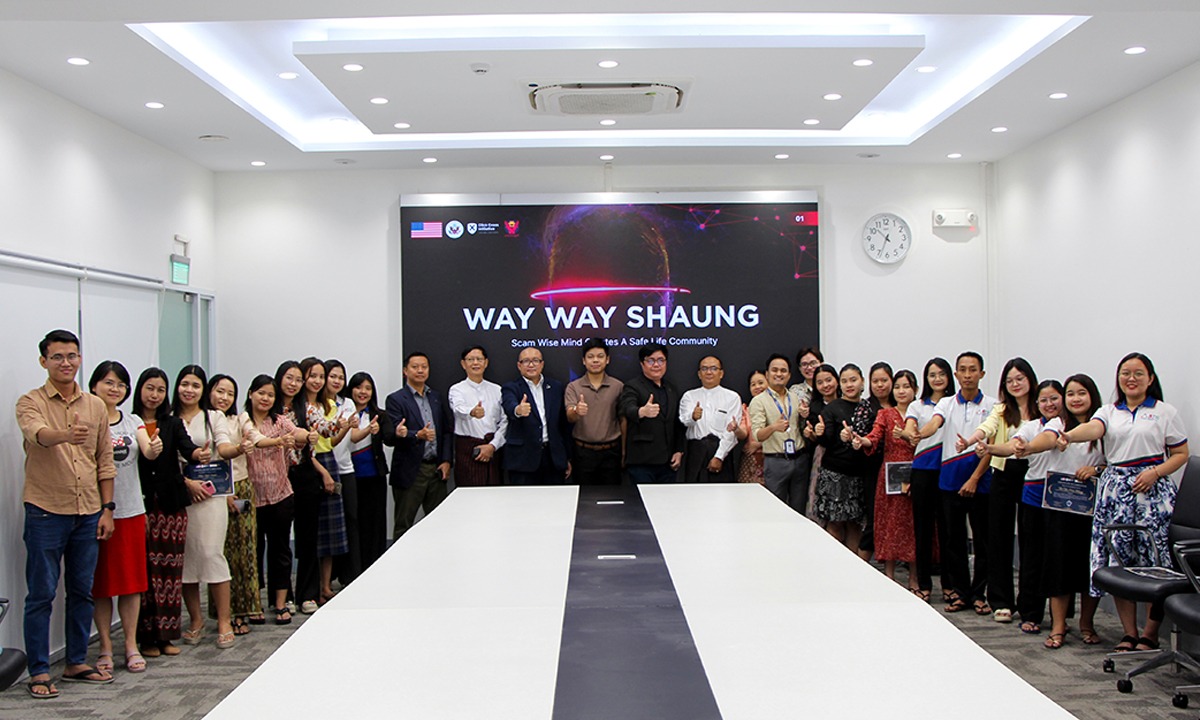
On 25 February 2026, Myanma Tourism Bank (MTB) successfully held the Certificate Awarding Ceremony for staff who completed the “ဝေးဝေးရှောင် (Way Way Shaung)” Scam Prevention Ambassadors Program. As financial fraud and digital scam methodologies become increasingly sophisticated across both rural and peri-urban communities in Myanmar, proactive consumer protection has become a strategic necessity. The Way Way Shaung initiative focuses on: • Enhancing Digital Literacy • Strengthening Fraud Detection Awareness • Building Internal Capacity for Scam Prevention • Protecting Customers from Financial & Psychological Harm The trained Scam Ambassadors are now equipped to: ✔ Monitor emerging scam patterns ✔ Disseminate preventive knowledge internally and externally ✔ Support early risk identification ✔ Contribute to broader financial stability At MTB, we recognize that safeguarding public trust is fundamental to banking sustainability. Financial institutions must move beyond reactive measures toward preventive education and structured awareness programs that reinforce consumer resilience. We remain committed to continuous knowledge-sharing and collaborative engagement to protect the hard-earned savings of Myanmar’s citizens. 𝐂𝐫𝐞𝐚𝐭𝐞 𝐘𝐨𝐮𝐫 𝐖𝐨𝐫𝐥𝐝 𝐖𝐢𝐭𝐡 𝐌𝐓𝐁 သင့်အနာဂတ်ဖန်တီးဖို့ MTB နဲ့လက်တွဲစို့
Read More
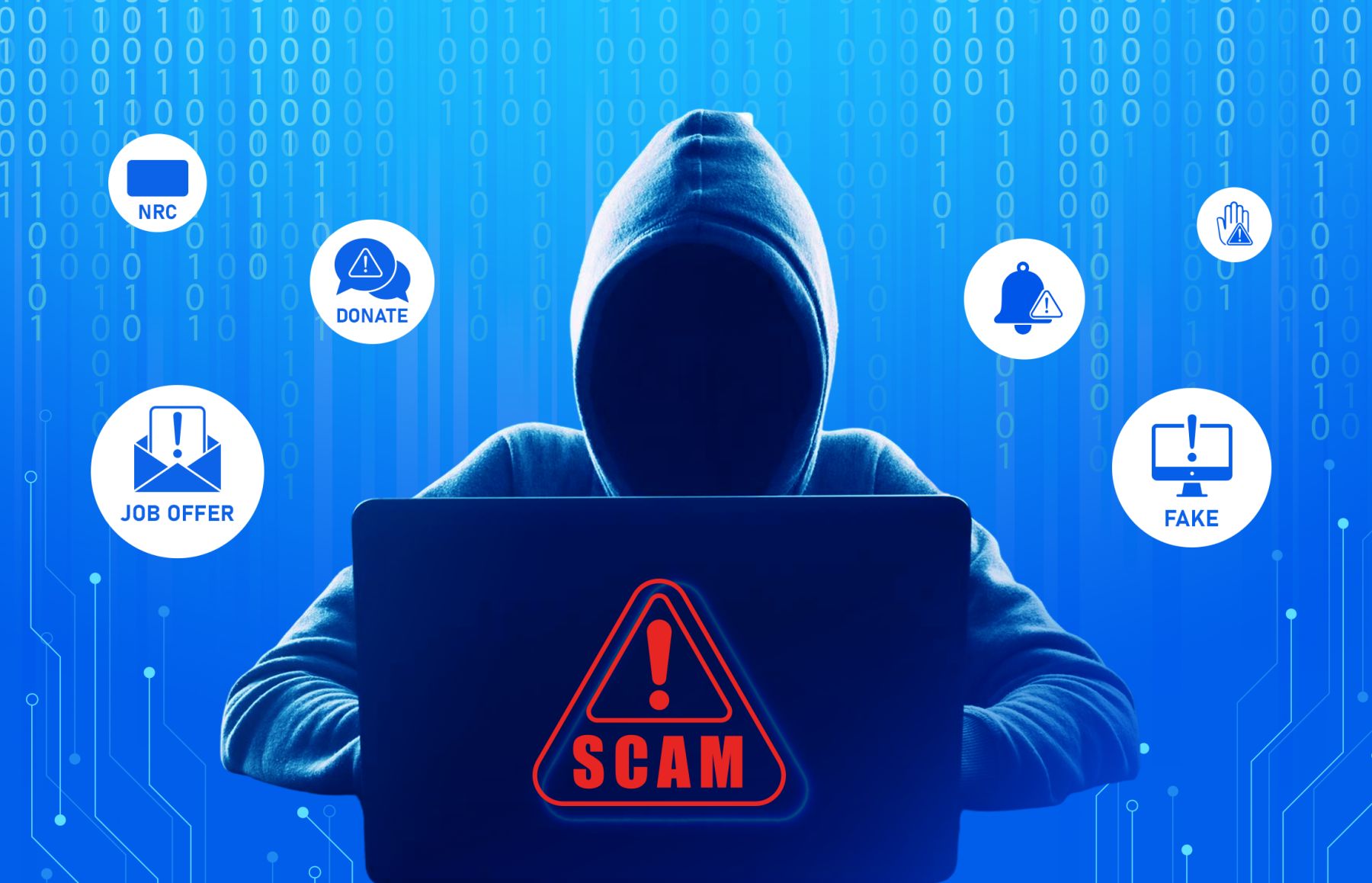
1. Important Information Regarding Online Scams With the advancement of technology and the increasing use of social networks, the proliferation of online-based scams has become a significant problem for the public today. 2. What is an Online Scam? An online scam refers to deceiving and defrauding the public of money or personal information by utilizing online platforms such as telephones, social networks, websites, applications, and internet banking. It has been observed that commonly used services like Mobile Banking and Mobile Pay are increasingly being used as mediums for these scams. 3. Top 5 Most Common Online Scam Types The most prominent online scam types include: * 𝐏𝐡𝐢𝐬𝐡𝐢𝐧𝐠 𝐅𝐫𝐚𝐮𝐝: Scams that obtain information by using fake applications, websites, or Facebook pages. * 𝐒𝐨𝐜𝐢𝐚𝐥 𝐌𝐞𝐝𝐢𝐚 𝐚𝐧𝐝 𝐓𝐞𝐥𝐞𝐜𝐨𝐦𝐦𝐮𝐧𝐢𝐜𝐚𝐭𝐢𝐨𝐧 𝐅𝐫𝐚𝐮𝐝: Scams where individuals impersonate employees of banks, financial institutions, or mobile money service providers. * 𝐎𝐧𝐥𝐢𝐧𝐞 𝐑𝐨𝐦𝐚𝐧𝐜𝐞 𝐅𝐫𝐚𝐮𝐝: Scams that involve building intimate relationships online to defraud victims. * 𝐎𝐧𝐥𝐢𝐧𝐞 𝐓𝐫𝐚𝐝𝐢𝐧𝐠 / 𝐓𝐫𝐚𝐝𝐢𝐧𝐠 𝐏𝐥𝐚𝐭𝐟𝐨𝐫𝐦 𝐅𝐫𝐚𝐮𝐝: Scams that use business transactions or investment opportunities as a pretext for deception. * 𝐄𝐦𝐩𝐥𝐨𝐲𝐦𝐞𝐧𝐭 𝐒𝐜𝐚𝐦: Scams that promise job opportunities to defraud victims. 4. Other Online Scam Methods Other observed online scam methods include: * Fraudulent solicitations for donations. * Scams by creating fake online shop accounts and approaching buyers under genuine online shop live sales. * Scams by creating fake accounts impersonating fortune-tellers or ritual specialists and repeatedly demanding money transfers. * Scams by creating fake consultant accounts, obtaining personal information, and then extorting or defrauding victims. * Scams that entice victims with promises of lucky draws by impersonating event invitations. * Scams by impersonating administrative authorities and threatening victims. 5. Characteristics and Behavior of Scammers * Operate in groups rather than individually. * Include individuals proficient in IT. * Create fake webpages and applications. * Present themselves in a way that inspires trust. * In some cases, victims are forced to participate through intimidation. 6. Recommendations to Prevent Online Scams * Do not easily provide personal information (CSC, Password) to anyone. * Do not download unknown applications. * Only trust and communicate with verified organizations or individuals. * Do not fully trust someone until you have verified their KYC (Know Your Customer) information. * Do not easily follow advice from unknown or unfamiliar individuals. * Do not easily access online links sent by unknown individuals.
Read More
MTB Bank is sharing the Central Bank of Myanmar's Financial Intelligence Unit's critical alert: "Beware of Fake ID Cards and Online Scams." We want all citizens to be aware and protect themselves from fraudsters.
Read More
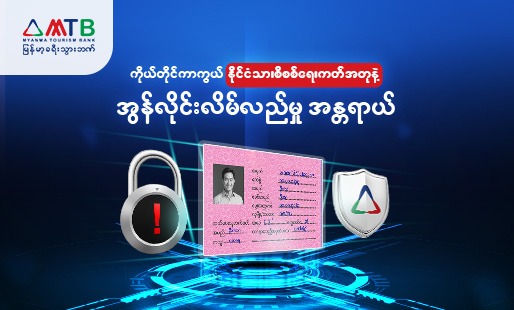
Fraudsters are employing various methods to commit financial scams. Currently, a prevalent and dangerous scam involves the use of fake National Registration Cards (NRCs) to steal important personal information online, leading to unwanted financial losses. Therefore, MTB Bank wishes to share crucial self-protection guidelines with all its existing and new customers to help them stay vigilant. Points to Note to Prevent Misuse of Your NRC and Personal Information by Fraudsters Online (checkmark)Sharing your NRC is akin to putting yourself at risk. (checkmark)Protecting your personal information is your own responsibility. (checkmark)It's important to be aware that using fake NRCs can drag you into legal problems. (checkmark)You should only use a genuine NRC. Ways to Prevent Your NRC from Being Misused (checkmark)Do not give your NRC to anyone except for legitimate business purposes. (checkmark)Do not unnecessarily make copies of your NRC and give them to unrelated parties. (checkmark)Do not share your NRC and personal information online. MTB Bank advises all its users to contact the MTB Bank Call Center at 09 682 682 682 if they encounter any suspicious situations to prevent unwanted financial losses. Create Your World With MTB သင့်အနာဂတ်ဖန်တီးဖို့ 𝐌𝐓𝐁 နဲ့လက်တွဲစို့ #MyanmaTourismBank #MTBBank #ScamAwareness #NRC #IdentityTheft #OnlineFraud #StayAlert
Read More